Don’t Risk It: Why Proper PPE Is Your Best Defence Against Workplace Injuries and Legal Trouble

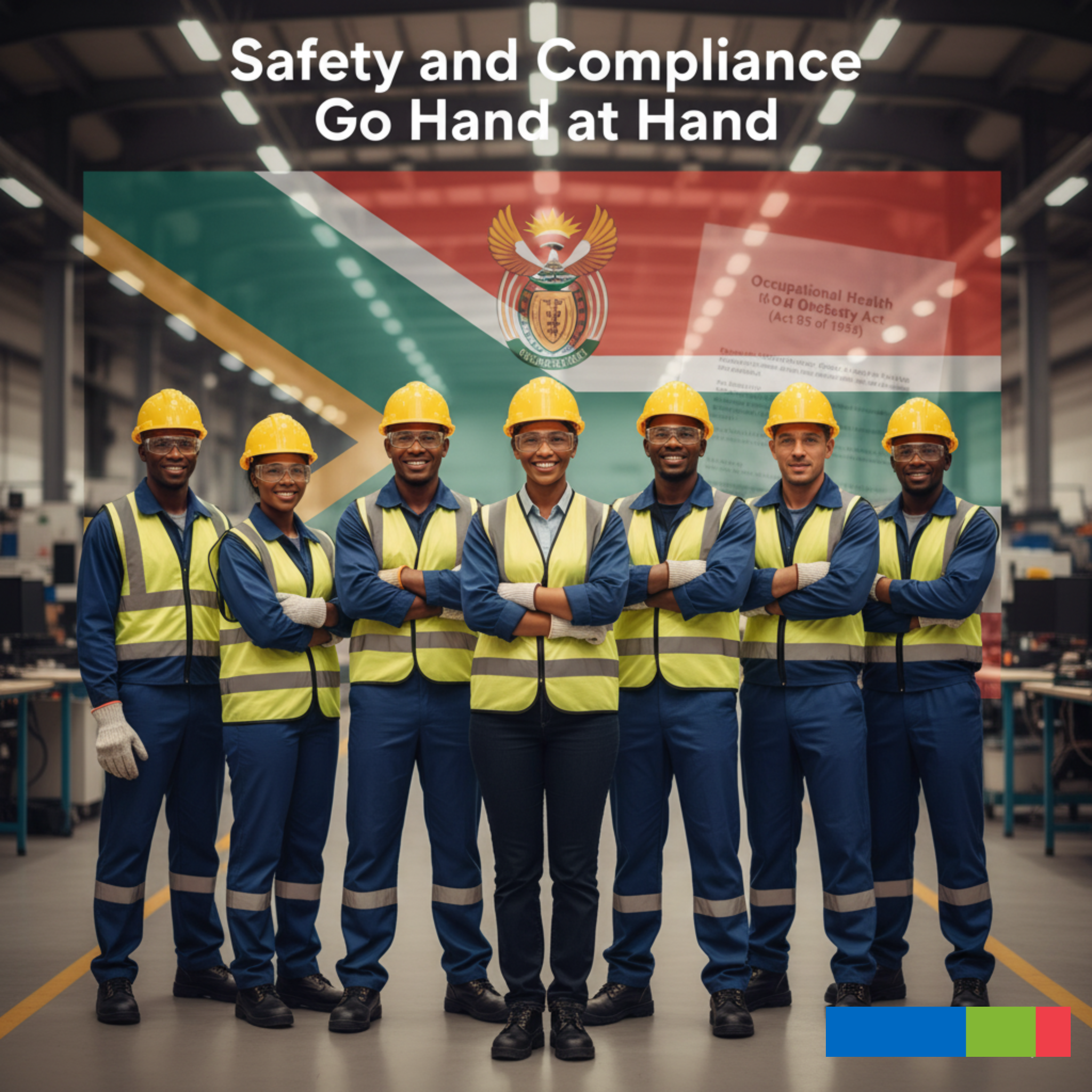
Every day, thousands of South African workers face hazards that could change their lives in seconds — from falling objects to chemical exposure and electrical shocks.
The right Personal Protective Equipment (PPE) can mean the difference between a safe day at work and a serious injury.
But PPE is only one part of the bigger safety picture. True workplace protection starts with understanding how to control hazards before they reach your people.
This comprehensive guide will walk you through the key principles of workplace safety — from understanding the Hierarchy of Controls and the role of PPE, to compliance standards, certification requirements, and best practices that keep your business legally compliant and audit-ready.
By the end, you’ll know how to protect lives, prevent legal risks, and build a strong safety culture in your workplace.
Topics Covered in This Blog Post
- Understanding the Hierarchy of Controls
- Elimination – Removing the Hazard Completely
- Substitution – Replacing the Hazard with Something Safer
- Engineering Controls – Isolating People from the Hazard
- Administrative Controls – Changing the Way People Work
- Personal Protective Equipment (PPE) – The Last Line of Defence
- The Importance of PPE in the Workplace
- Why PPE Compliance Is a Legal and Moral Obligation
- 1. Understanding the Legal Framework
- 2. PPE Regulations under the OHS Act
- Employer Responsibilities
- Employee Responsibilities
- Real-Life Scenarios
- Final Thoughts
- Frequently Asked Questions (FAQs)
Safety Starts with Smart Choices
Workplace safety is not only about wearing a hard hat or gloves. It begins long before anyone puts on protective gear. True safety starts with understanding risks, planning ahead, and creating an environment where everyone values safety.
Every day, thousands of workers around the world face hazards that could cause serious injuries or even death. In South Africa, many of these incidents could have been prevented with better safety systems, awareness, and the right use of Personal Protective Equipment (PPE).
To manage workplace risks effectively, safety experts use something called the Hierarchy of Controls. This is a structured approach developed by the National Institute for Occupational Safety and Health (NIOSH) and supported by South Africa’s Department of Employment and Labour. It helps organizations identify the best methods to prevent harm, starting with the most effective options and ending with PPE, which is the last line of defence.
Let’s explore how this system works in simple, practical terms.
Understanding the Hierarchy of Controls
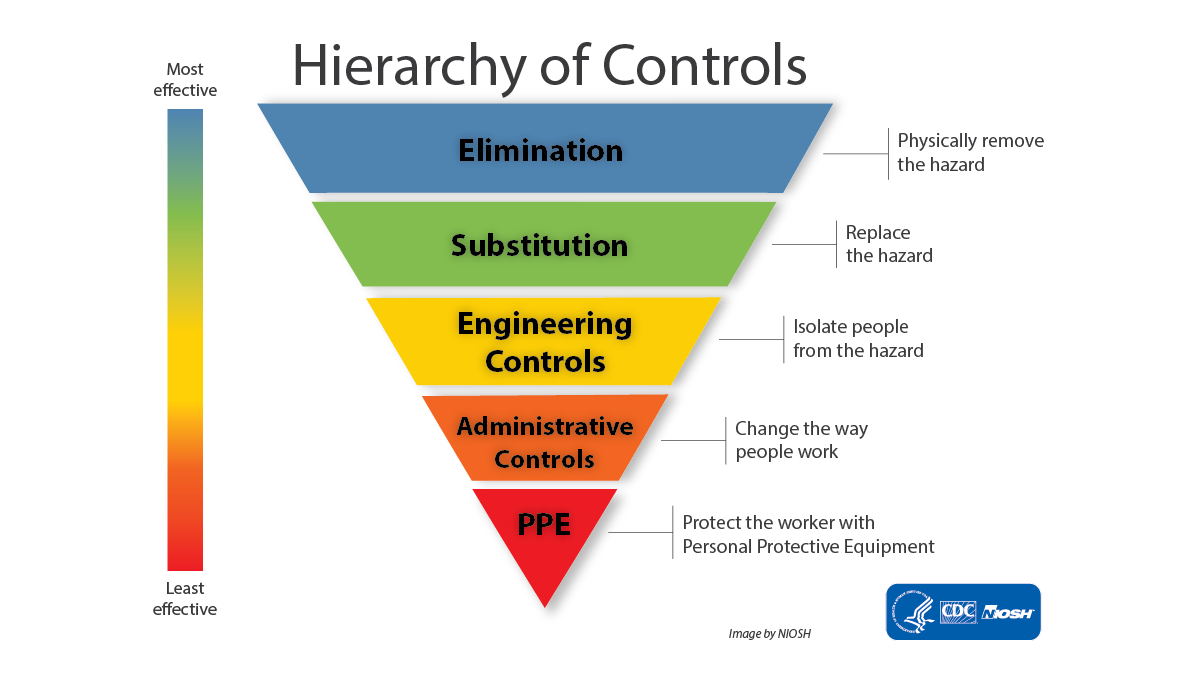
The Hierarchy of Controls is like a ladder with five steps. Each step represents a different method for managing hazards. The higher you go on the ladder, the more effective and permanent the solution.
Here are the five levels of control:
1. Elimination – Removing the Hazard Completely
The safest and most effective way to protect workers is to eliminate the hazard altogether. If something is dangerous, remove it from the environment.
For example:
Instead of requiring workers to lift heavy boxes manually, install an automated lifting system. By doing so, you remove the risk of back injuries entirely. No hazard means no injury.
However, elimination is not always possible, especially in industries where the hazard is part of the job, such as construction or manufacturing. That is why we move to the next level.
2. Substitution – Replacing the Hazard with Something Safer
If you cannot eliminate the hazard, try to replace it with a less dangerous option.
For instance, if a cleaning process uses a toxic chemical, you can switch to a non-toxic or plant-based alternative. Workers perform the same task, but with far less risk to their health.
Substitution keeps the job running smoothly while reducing exposure to harmful substances or dangerous equipment.
3. Engineering Controls – Isolating People from the Hazard
When elimination and substitution are not possible, the next best solution is to design the workplace to keep people away from hazards.
This involves physical barriers or systems that control exposure. Examples include:
- Installing guardrails on elevated platforms to prevent falls
- Using soundproofing materials to reduce noise levels
- Installing fume extraction systems to remove harmful gases
- Using machine guards to protect workers from moving parts
Engineering controls are powerful because they do not depend on workers remembering to take action. The safety feature is built into the environment.
4. Administrative Controls – Changing the Way People Work
Sometimes, safety can be improved by changing how tasks are performed or how work is organized. These are known as administrative controls.
Examples include:
- Rotating workers between tasks to reduce exposure to noise or chemicals
- Scheduling hazardous work during times when fewer people are present
- Conducting regular safety training sessions
- Implementing clear signage and standard operating procedures
Administrative controls rely on awareness, training, and good habits. They are not as strong as elimination or engineering solutions but are still an important part of a safety system.
5. Personal Protective Equipment (PPE) – The Last Line of Defence
The final step in the hierarchy is Personal Protective Equipment (PPE). PPE is used when hazards cannot be removed or reduced by any other means. It provides a physical barrier between the worker and the hazard.
Examples of PPE include:
- Safety helmets
- Safety goggles or face shields
- Respirators or masks
- Hand Protection
- Safety boots
- Hearing protection
PPE protects workers from injuries caused by falling objects, sharp materials, chemical splashes, noise, and airborne particles.
However, PPE is only effective when it is used correctly, fits properly, and is regularly maintained. It should never be seen as a replacement for other safety measures. Instead, it should be viewed as the final layer of protection.
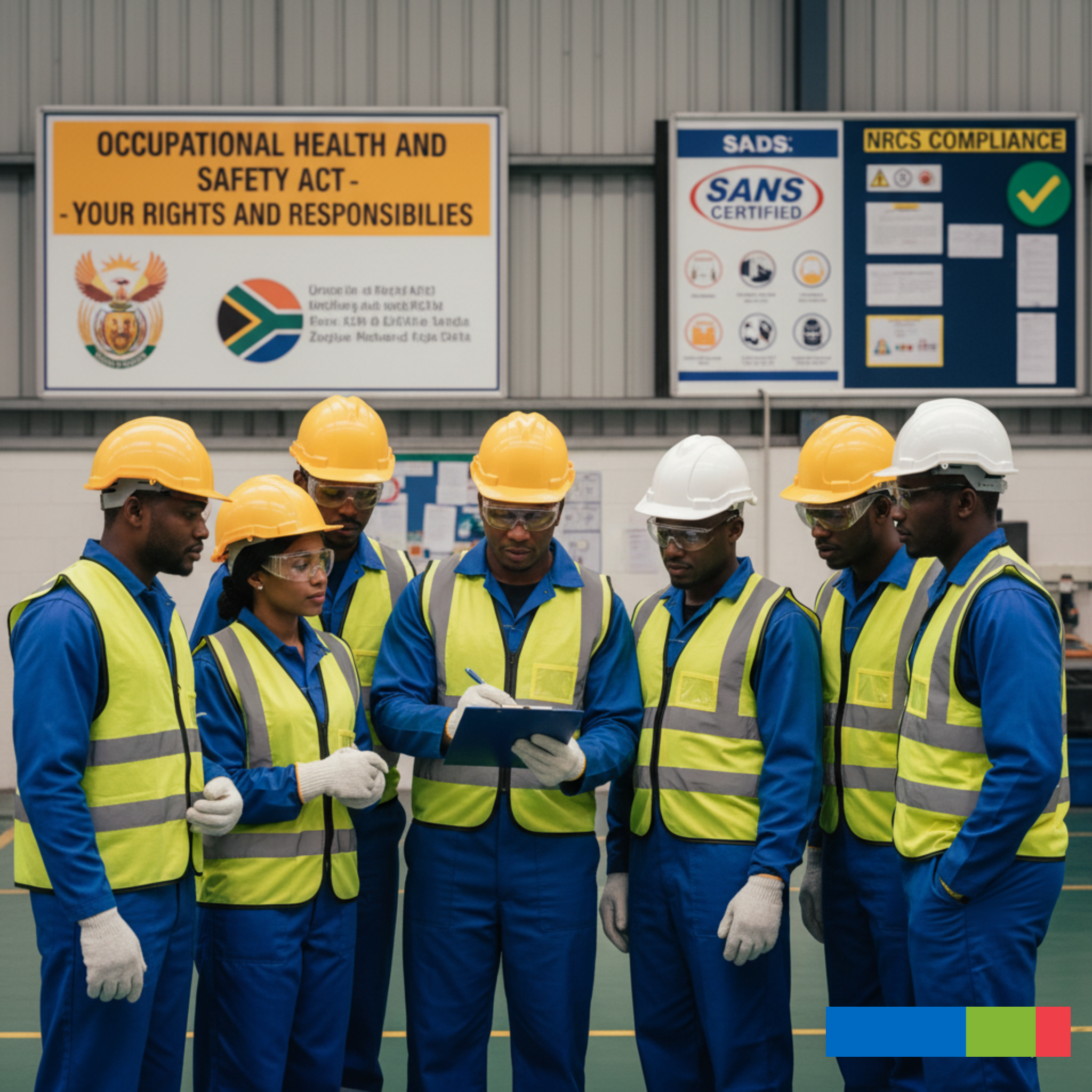
The Importance of PPE in the Workplace
PPE plays a critical role in preventing injuries in high-risk industries such as construction, mining, manufacturing, and laboratories. It protects workers from hazards that cannot be completely eliminated.
Beyond personal safety, proper PPE use also protects the company from legal and financial risks. When employees are injured, businesses face downtime, compensation claims, and possible penalties for non-compliance.
In South Africa, theOccupational Health and Safety Act (Act 85 of 1993)makes it clear that employers are legally required to provide suitable PPE free of charge and ensure that workers are trained to use it correctly.
Why PPE Compliance Is a Legal and Moral Obligation
Personal Protective Equipment (PPE) is not just about safety – it’s about compliance with the law. In South Africa, workplace safety is guided by strict regulations that make employers responsible for protecting their employees from harm.
The Occupational Health and Safety Act (Act 85 of 1993) and related regulations clearly state that employers must identify risks, provide appropriate PPE, and ensure that it is properly used and maintained. Failing to meet these requirements doesn’t just risk worker injury – it can lead to serious legal consequences, fines, or even criminal liability.
In this part, we’ll explain what the law says, who is responsible for PPE, what the standards mean (SANS and NRCS), and how to make sure your business stays compliant.
1. Understanding the Legal Framework
The Occupational Health and Safety Act (OHS Act) is South Africa’s main workplace safety law. Its purpose is to ensure that every employer provides and maintains a safe and healthy working environment for all employees.
Under this Act, employers must:
- Identify potential hazards in the workplace
- Assess the risks associated with those hazards
- Eliminate or control risks as much as reasonably possible
- Provide and maintain PPE where hazards cannot be removed completely
- Ensure employees understand how to use PPE correctly
The law also gives employees the right to a safe workplace and the responsibility to follow safety rules and use PPE provided by their employer.
2. PPE Regulations under the OHS Act
The General Safety Regulations (GSR) form part of the OHS Act and cover PPE requirements in detail. They make it clear that employers must:
- Provide PPE free of charge to employees who are exposed to hazards
- Ensure the PPE is suitable for the specific risk or task
- Train employees on the correct use, cleaning, and storage of PPE
- Replace PPE when it becomes damaged, expired, or no longer effective
- Supervise and enforce PPE use during work activities
Employers who ignore these duties can face enforcement action from the Department of Employment and Labour, including written warnings, fines, or even prosecution in severe cases.

While the law places the primary duty on the employer, safety is a shared commitment. Here’s a detailed breakdown of the Employer Responsibilities and Employee Responsibilities necessary for a fully compliant workplace.
Employer Responsibilities
Employers have a legal and moral duty to ensure workplace safety. Their responsibilities include:
- Provide PPE: Employers must supply PPE at no cost to workers who face potential hazards.
- Select Correct PPE: The type of PPE must match the risks of the job (for example, ear protection for loud noise, gloves for chemicals, helmets for falling objects).
- Train Employees: Workers must be shown how to correctly wear, clean, and maintain their PPE.
- Inspect and Maintain: PPE must be checked regularly for wear, tear, or defects and replaced when necessary.
- Monitor Compliance: Employers should ensure workers use PPE correctly and consistently.
- Keep Records: Documentation of PPE issue, training, and replacement helps prove compliance.
If an accident occurs due to inadequate or missing PPE, the employer can face fines, compensation claims, or even criminal charges.
Employee Responsibilities
Employees also share responsibility for safety. They must:
- Use PPE Correctly: Workers must wear PPE consistently and correctly.
- Take Care of PPE: Equipment should be looked after properly and reported if damaged or lost.
- Report Problems: Employees must inform supervisors if PPE is missing, uncomfortable, or not effective.
- Follow Training and Instructions: Proper use ensures both personal and team safety.
If an employee chooses not to wear PPE that has been provided and trained for, they can be held responsible for their injuries or face disciplinary action.
Real-Life Scenarios
Let’s look at how these responsibilities work in practice:
Scenario 1:
An employer fails to provide gloves to workers who handle broken glass.
Outcome: The employer is responsible for any injuries because PPE was not provided.
Scenario 2:
The employer provides gloves, but they are too thin to protect against sharp materials.
Outcome: The employer is still at fault because the PPE was not suitable for the hazard.
Scenario 3:
The employer provides strong, cut-resistant gloves and trains workers, but one worker refuses to wear them.
Outcome: The worker is responsible for their own injury and may face disciplinary action.
Final Thoughts
Safety is a shared responsibility. Employers must create a safe working environment, but employees must also take safety seriously. PPE is not just an accessory or a workplace rule. It is a personal shield that can save lives.
The difference between a safe workday and a serious injury often comes down to one simple choice — whether or not to use the protective equipment provided.
Always remember:
“Do not take shortcuts with safety. Your life and your livelihood depend on it.”