Elevate Your Workplace: The 2025 Guide to Flawless PPE Compliance in South Africa (Part 1 – Why It Matters)


- For manufacturers: Builds brand credibility, opens national and international markets, ensures regulatory compliance
- Part 1 (this post) explains why PPE compliance is crucial, introduces the key regulatory bodies, and explores how South Africa aligns with international safety standards.
- Part 2 dives into the practical side, including the certification process for local and imported PPE, plus how to identify safe and approved gear in real-world scenarios.
- What Is PPE?
- What are the key PPE standards and regulatory bodies in South Africa?
- How does the PPE certification process work in South Africa?
- What are the roles of SANAS, SANS, SABS, NRCS and SAHPRA in PPE certification?
- Frequently Asked Questions (FAQs)
- Head protection: hard hats, helmets, bump caps
- Eye and face protection: safety goggles, face shields, visors
- Respiratory protection: masks, respirators, filters
- Hand protection: gloves for chemicals, heat, electricity, and general use
- Body protection:Boiler suits,safety jackets,flame-resistant clothing
- Foot protection: steel-toe boots, slip-resistant shoes
- Hearing protection: earplugs and earmuffs
- Fall protection: safety harnesses and lanyards
- A mining company buys boots that look sturdy but lack SABS slip resistance certification. A worker slips, gets injured, and suddenly the business faces lawsuits, medical costs, and reputation damage.
- In a hospital, using non-compliant surgical gloves risks contamination during surgery, exposing patients to infection and healthcare providers to legal claims.
- Avoid costly legal penalties
- Protect employee health and safety
- Safeguard long-term business reputation and sustainability
- SANAS (South African National Accreditation System) – Is an official group in South Africa that checks and approves labs and companies to make sure they do their work correctly and follow the right rules and standards. Its purpose is to accredit testing laboratories to ensure they meet international competence requirements.
- SANS (South African National Standards) – Are the rules and guidelines that say how products and services in South Africa should be made, tested, and used so they are safe, good quality, and reliable. In terms of South African law, not all SANS standards are compulsory. Only the SANS standards that are gazetted into law are referred to as compulsory standards/specifications. The SANS standards that are not gazetted into law are voluntary; however, it is a good practice for companies to adopt them to ensure their products are safe for their customers/users.
- SABS (South African Bureau of Standards) – Publishes the technical standards for PPE design, performance, and durability. It also conducts testing and issues SABS Approved PPE certification.
- NRCS (National Regulator for Compulsory Specifications) – Is a South African organization that only regulates the products that are supposed to comply with compulsory specifications (i.e., compulsory SANS standards). It issues a Letter of Authority (LOA) to companies that import or manufacture these products to allow them permission to sell them in South Africa legally. In short, it legally enforces compliance with compulsory specifications.
- SAHPRA (South African Health Products Regulatory Authority) is the national regulator responsible for ensuring that medical devices and health-related products, including certain types of Personal Protective Equipment (PPE) such as surgical gloves, gowns, and masks, are safe, effective, and of good quality for use in South Africa.
- International Standards Bodies (ASTM, ISO) – Provide global testing guidelines referenced in South African PPE compliance processes.
- Testing followsSANS,ASTM, andISOstandards for PPE compliance
- Use of certified, calibrated, and high-precision testing equipment
- Regular inspections and audits to maintain operational competence and compliance
- Design: Shape, size, comfort, and protective features.
- Materials: Impact resistance, fire safety, chemical protection, and durability.
- Performance: Shock absorption, puncture resistance, heat safety, and long-term reliability.
- Mechanical strength, tear resistance, and puncture protection
- Resistance to heat, fire, and chemical hazards
- Impact absorption, shock protection, and ergonomic usability
- Compliance with SANS, ASTM, and ISO safety regulations
- For manufacturers: Builds brand credibility, opens national and international markets, ensures regulatory compliance
Have you ever wondered if the PPE you rely on truly meets the safety standards needed for your workplace? In South Africa, navigating PPE compliance can feel overwhelming, right? But it doesn’t have to be.
This two-part guide breaks everything down for you:
Across industries like construction, mining, healthcare, and manufacturing, Personal Protective Equipment (PPE) acts as the final safety barrier when other measures fail. It helps prevent serious injuries, protects lives, and reduces workplace risks.
But here’s the big question: How can you be sure the PPE you’re using is truly safe and approved?
In South Africa, strict rules and standards exist to ensure PPE is effective, legally compliant, and fit for workplace use. This guide breaks down the key organizations like SANAS, SANS, SABS, NRCS, and SAHPRA, and explains how international standards such as ASTM, ISO, and CE fit into the compliance system.
Whether you’re a safety officer, procurement manager, or business owner, knowing these rules helps you protect your team, avoid costly penalties, and strengthen trust in your workplace.
The following topics will be covered in this guide:
WHAT IS PPE?
The word PPE can sometimes be tricky, right? That’s why many people, when they hear it, immediately think of masks, gloves, and hand sanitizers from the COVID-19 pandemic. And yes, that’s true COVID-19 brought PPE into the spotlight. But PPE is much broader. It’s any gear designed to protect workers from risks in their workplace.
PPE stands for Personal Protective Equipment. It includes clothing, equipment, or gear designed to shield workers from hazards on the job. The main goal of PPE is to reduce exposure to risks that can’t be completely removed through safety systems, training, or engineering controls. In simple terms, PPE is the last line of defence between a worker and potential injury, illness, or even death.
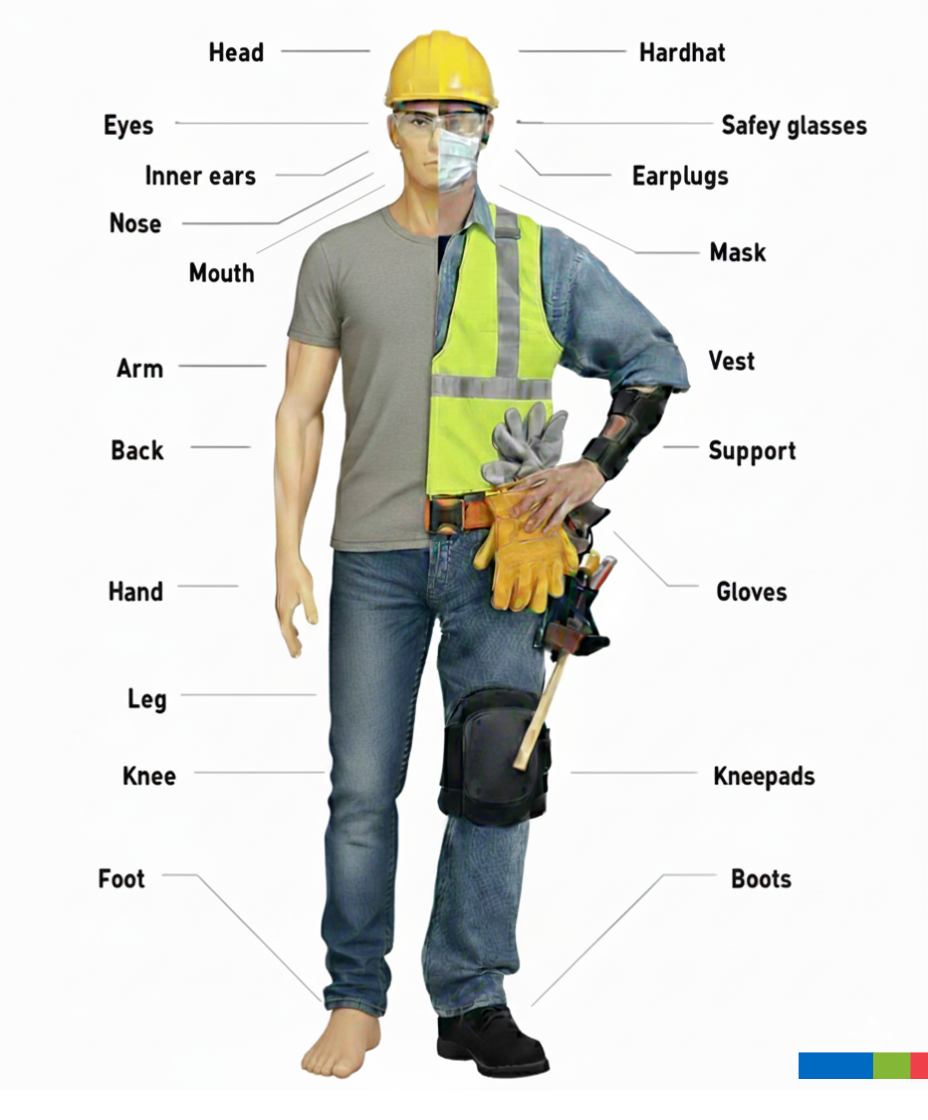
Common Types of PPE Used in South Africa
Using the right PPE in the workplace helps businesses protect employees, reduce accidents, avoid legal penalties, and build a strong safety culture.
WHY PPE COMPLIANCE MATTERS FOR WORKPLACE SAFETY IN SOUTH AFRICA?

PPE isn’t just about ticking a compliance box, it’s both a legal requirement and a safety responsibility.
Imagine this:
That’s why South African workplace laws require all employers to supply PPE that meets SANS standards and passes testing by accredited bodies.
Here’s a reality check: According to a recentBioMed Central Study, 34% of workplace accidents are caused by not using PPE at the time of the incident, that’s over one-third of accidents avoidable with proper compliance and equipment.
By prioritising PPE compliance, businesses can:
WHAT ARE THE KEY PPE STANDARDS AND REGULATORY BODIES IN SOUTH AFRICA?
South Africa operates a robust PPE safety certification system to ensure that all Personal Protective Equipment on the market is safe, reliable, and compliant. This framework involves several key organisations:
Together, these institutions form a strong compliance network that ensures workers receive tested, certified, and legally approved safety equipment.
HOW DOES THE PPE CERTIFICATION PROCESS WORK IN SOUTH AFRICA?
When it comes to PPE compliance in South Africa, meeting workplace safety standards is not optional, it is a legal, regulatory, and occupational health requirement.
South Africa relies on a structured PPE certification and testing system to ensure that safety equipment, including hard hats, safety gloves, respirators, protective clothing, safety boots, and industrial eyewear, performs effectively in high-risk industries such as construction, mining, healthcare, manufacturing, chemical plants, and industrial facilities.
Below we shall delve a bit deeper into all the regulatory bodies that are involved in testing and approving PPE.
What are the roles of SANAS, SANS, SABS, NRCS, and SAHPRA in PPE certification?
Personal Protective Equipment (PPE) can only keep workers safe if it is rigorously tested, certified, and legally approved. In South Africa, a network of organizations like SANAS, SANS, SABS,NRCSandSAHPRAwork together to make sure every piece of PPE on the market meets strict safety standards. Each has a distinct role, from accrediting laboratories to setting technical requirements and enforcing compliance. Understanding how these bodies operate is crucial for businesses, safety officers, and procurement managers who want to ensure the highest level of protection for their workforce.
What is SANAS’s role in accrediting PPE testing laboratories?
The South African National Accreditation System (SANAS) plays a critical role in the PPE compliance ecosystem. While SANAS does not conduct PPE testing directly, it accredits PPE testing laboratories to ensure all tests meet national and international safety standards.
A SANAS-accredited laboratory ensures:
SANAS makes sure PPE testing labs in South Africa are trustworthy and accurate. It doesn’t test PPE itself but accredits (approves) labs to ensure they use proper standards, equipment, and testing methods. This helps guarantee that PPE test results are reliable, fair, and internationally recognized, supporting both local safety and global trade.
How does SANS define PPE quality, safety, and performance standards?
The South African National Standards (SANS) define exactly how PPE should be designed, the materials it should use, and the performance it must meet. These standards ensure that protective equipment is effective, durable, and reliable in high-risk workplaces.
SANS standards cover:
For example, SANS 1397 for hard hats sets rules for impact resistance, penetration resistance, electrical safety, and ergonomic user comfort, ensuring reliable protection for construction workers, miners, industrial employees, and emergency responders have reliable head protection.
Many SANS standards align withASTMandISO, so PPE approved in South Africa is often accepted internationally, making it easier for local manufacturers to compete in global markets.
In conclusion, SANS standards ensure the safety, quality, and reliability of products in South Africa. Following SANS not only protects people but also helps local manufacturers compete globally and meet international safety requirements.
What is the SABS’s function in testing and certifying PPE?
The South African Bureau of Standards (SABS) is responsible for testing and certifying PPE. It ensures products meet the technical requirements of SANS, giving businesses and workers confidence that the equipment works as intended.
SABS laboratories assess PPE for:
PPE products that pass testing receive the SABS Approved mark, signalling verified compliance with South African workplace safety standards.